
 Marc Feng · 15 January 2025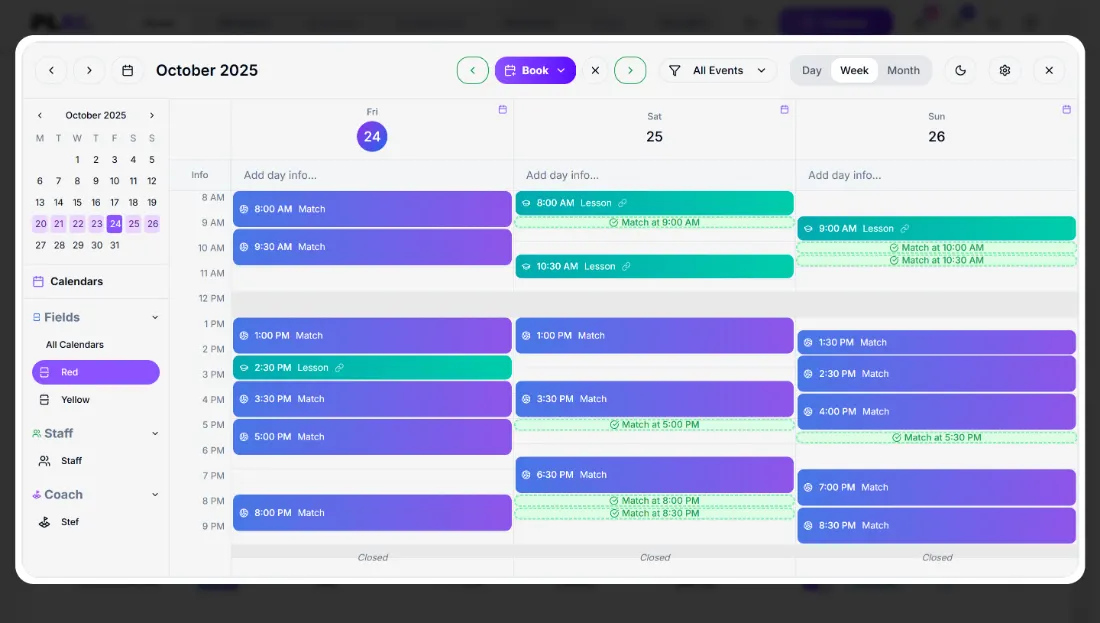
In many padel clubs, the same challenge persists: courts are packed in the evenings and weekends, but remain virtually empty during the day. These less-demanded time slots, known as off-peak hours in padel, typically occur between 9 AM and 12 PM, then between 2 PM and 5 PM. Yet they represent a tremendous opportunity to develop revenue, improve profitability, and attract new audiences.
Optimizing court occupancy rates isn't just about lowering prices. It's about building a comprehensive strategy at multiple levels: analyzing your booking statistics, implementing differentiated pricing, communicating effectively with your players, and using appropriate digital tools. When properly exploited, these hours can become a real growth engine for your club.
This guide offers concrete and immediately applicable solutions to fill your padel courts during off-peak hours: promotions, local partnerships, targeted marketing actions, and optimized management through specialized software. The objective is simple: transform your off-peak hours into dynamic and profitable periods, benefiting both your club and your members.
What Hours Are Considered Off-Peak?
Off-peak hours are not universal. While a general baseline can be established – typically from 9 AM to 12 PM, then from 2 PM to 5 PM – each padel club must analyze its own data to precisely identify the periods that need improvement.
Not all structures and activities are created equal. In some urban sectors, off-peak hours extend even further. Conversely, in industrial zones or areas near hospital complexes, time slots that seem "off-peak" can fill naturally. Hence the importance of analyzing real attendance data rather than relying solely on assumptions.
Optimizing these time slots is a strategic approach. It not only allows you to increase your court fill rates but also to diversify your clientele, expand your memberships, rates and services, and better monetize your existing infrastructure.
Analyze Your Bookings
The starting point is analyzing your occupancy rate by time slot over several weeks, even several months. This helps identify recurring trends and seasonal variations.
It's essential to distinguish between:
- Structurally off-peak hours (during the day, Monday to Friday)
- Occasional variations related to events, holidays, or weather
Some specialized management software can automatically generate fill reports by hour, day, court, or activity type. This facilitates quick decision-making on which schedules to target.
External Factors
A padel club's attendance also depends heavily on its environment:
- School holidays, when usually off-peak hours can fill up
- Standard office hours, which condition when working professionals come
- Weather, especially for complexes with outdoor courts
- Population density, proximity to business areas, campuses, administrations, or industrial zones
A padel club near a hospital or logistics center, for example, can attract audiences with shifted schedules, which naturally modifies the definition of its off-peak hours.
Importance of Knowing Your Audience
Padel is a social racket sport. Knowing your typical player profiles is essential for adapting your rates to the right time slots. Some examples:
- Students, often available in late morning or early afternoon
- Retirees, who prefer weekdays during the day
- Self-employed or liberal professionals, with greater schedule flexibility
- Shift workers, very present in certain geographic areas
By cross-referencing this attendance and customer profile data, you can precisely define your "real" off-peak hours and implement an effective fill strategy.
What Commercial Offers to Attract Customers?
Once low-traffic hours are identified, you still need to propose offers sufficiently attractive to draw audiences at these times. It's not just about lowering prices, but creating products adapted to these specific hours, likely to attract new clientele or encourage your current members to vary their playing habits.
Dynamic Pricing by Time Slot
Differentiated pricing by hour is now widely accepted by practitioners. It's an excellent way to distribute attendance while optimizing your overall revenue.
Concretely:
- More accessible rates from 9 AM to 12 PM and from 2 PM to 5 PM
- Standard or premium rates in the evening and weekends, depending on demand
It's essential to communicate well on this pricing logic: it's not about liquidating your courts, but offering an economic alternative to players available during less frequented hours, often forgotten by traditional pricing grids.
Off-Peak Hour Packages or Memberships
Offering specific rates for off-peak hours allows you to:
- Retain clientele available during the day
- Generate regular revenue on little-solicited hours
Examples of possible offers:
- A "midday & afternoon" membership, with unlimited access or predefined number of reservations
- Credits usable only during the day, at reduced prices
- A 10-game off-peak pass, valid only Monday to Friday before 5 PM
Some management software allows automatic restriction of these formulas to certain time slots. This avoids errors and smooths the user experience.
Group or Corporate Discounts
Off-peak hours can become an ideal ground for hosting:
- Groups of friends looking for a sports activity other than in the evening
- Companies wanting to organize sports sessions, team building, or active breaks for their employees
Implementing a pricing grid adapted to groups, or proposing hours reservable online for works councils, can transform usually empty hours into regular revenue sources.
Attract Through Targeted Communication
Proposing an attractive offer isn't enough if it's not visible at the right time, by the right people. Targeted communication allows you to maximize the impact of your off-peak offers without diluting your message or saturating your general audience.
Email Campaigns and Social Media
Email campaigns remain a powerful solution, provided they're well segmented. It's relevant to target:
- Players inactive in the evening but who have already booked during the day
- Members with active credits or memberships without recent reservations
- Former participants in weekday clinics or tournaments
In parallel, your social media can relay your off-peak pricing by highlighting:
- Pricing advantages
- Immediate court availability
- The tranquility of playing outside peak hours
The key is creating a sense of opportunity: "book now," "your courts at reduced prices," "play without waiting."
Local Collaborations (Sports Clubs, Schools, Companies)
Building partnerships with local players is a low-cost and often very effective lever:
- Neighboring sports clubs (crossfit, yoga, judo...): cross-rates allow introducing padel to a new audience
- Nearby schools or universities: playing times in late morning or early afternoon can work very well for students
- Local companies: rates or courts dedicated to employees, especially during lunch breaks or late afternoons
These partnerships can be activated occasionally through field actions (flyers, displays) or through localized digital campaigns, linked to your off-peak offers.
Animate Time Slots with Events
Off-peak hours can become strategic moments if they're structured around adapted events. This not only generates traffic but also creates habits and transforms unattractive playing times into regular appointments.
Organizing afternoon events has several advantages:
- Immediate court filling
- Discovery of the club atmosphere by new audiences
- Retention of active players on these time slots
Examples of effective off-peak animations:
- Express tournaments at midday: 1.5-hour format, with possible quick food on site
- Free or preferential rate initiations for beginners available in mornings or afternoons
- Corporate events: team building format over 2 hours, during the week
- Technical or tactical clinics for retirees or part-time players
- "Padel brunch" during the week, combining padel and conviviality
By animating these periods, you show that your padel or multi-sport club lives from morning to evening, not just in the evening. This also reinforces the perception of value around your infrastructure.
Create Strategic Partnerships
To sustainably increase fill rates during off-peak hours, it's relevant to build targeted partnerships with structures having audiences with shifted schedules. The objective is to create a regular flow of reservations during usually little-solicited hours.
Partner with Local Companies
Some companies, particularly in hospital, industrial, or logistics sectors, have collaborators available at atypical hours. This is a direct opportunity to complete your courts during standard working hours.
Examples of relevant targets:
- Hospitals and clinics
- Fire stations or gendarmerie
- Factories with team rotations
- Transport, logistics, public services
The idea is to propose a dedicated offer, such as:
- A group package at preferential rates
- Courts reserved weekly
- Access via a corporate formula or employee card
Works Councils
Works councils and employee representative committees are often looking for new sports activities for their employees. Padel, accessible and convivial, is perfectly adapted to this type of demand, particularly during low-traffic time slots.
Assets to highlight:
- Weekday availability
- Packaged offers (court + drink or meal)
- Possibility of organizing internal tournaments or discovery workshops
Some professional tools allow managing reserved access for works councils, with a dedicated module facilitating reservations, billing, and attendance tracking.
Leverage Technology to Streamline Reservations
Optimizing off-peak hours doesn't rely solely on rates or communication. Operational efficiency is also an essential lever. And that's where technology plays a central role, allowing you to automate, segment, and intelligently follow up.
A well-configured specialized management software with a dedicated application allows transforming off-peak hours into dynamic slots, without overloading your team thanks to online payment.
Key Features for Off-Peak Optimization
Modern club management platforms integrate several features specifically designed to boost filling of less frequented hours while facilitating your daily management through a player application.
Key features:
- Booking filtering by hours, to track occupancy rates by day and hour
- Targeted push notifications: automatic follow-up of players available during the day, highlighting a specific slot
- Creation of "off-peak" credit offers: usable only on certain time slots, with specific pricing
- Integrated corporate module, allowing creating business accounts, attributing credits to employees, and tracking usage without manual management
These solutions allow acting proactively, by following up with the right profiles, at the right time.
The approach doesn't simply consist of "lowering prices," but making the offer visible and accessible where it makes sense.
Conclusion
Optimizing off-peak hours is a lever too often neglected, yet it represents a stable and recurring revenue source for any padel club. By precisely understanding your underutilized hours, adapting your commercial pricing, developing local partnerships, and automating your management, you can transform these hours into a real economic asset.
The key insight is clear: filling your peak hours allows paying the bills, but filling your off-peak hours allows generating profit. By implementing a comprehensive strategy that combines smart pricing, targeted marketing, strategic partnerships, and efficient technology, you can turn your club's quietest hours into its most profitable opportunities.
Remember that successful off-peak optimization requires a holistic approach. It's not just about discounts – it's about creating value propositions that attract the right audiences at the right times, building sustainable revenue streams that complement your peak-hour business and create a more resilient, profitable club operation.
Transform Your Club with PLAI
PLAI is the all-in-one platform that helps padel clubs optimize their operations, maximize revenue, and grow sustainably. From intelligent scheduling and dynamic pricing to automated payments and member analytics, PLAI gives you the tools to turn every hour into a profitable opportunity.


 Isabella Rodriguez · 19 February 2025 · 11 min read